

At the Singapore Institute of Planners’ biennial awards, enCity’s Red River Dragon Park Master Plan for Hanoi was honoured with the Award in Excellence in Urban Design, Placemaking & Public Space. The recognition highlights not only the project’s design ingenuity but also its redefinition of what it means to plan for floodplains in a rapidly urbanising region.


For decades, the Red River floodplain has been treated as marginal land: prone to inundation, disconnected from the city, and left largely underused. Conventional approaches might have sought to defend the city against the river. enCity’s proposal instead reframes the challenge: turning backwater into waterfront by embracing seasonal flooding as the structuring logic for a new civic landscape.

“If we miss the historical role of the river as a fundamental resource, it is not just a failure of perception – it is also a failure of imagination. Leveraging in the past, the Red River should be considered the key protagonist in the objectives of making Hanoi green (xanh), cultural (văn hiến), civilized (văn minh), and modern (hiện đại). Taking challenge as an opportunity, we must take into consideration the effective value of the River, not only as a historical urban nurturing source but as a key to the city’s green sustainable future.”
– Arch. Marco Buinhas, Design Director of enCity, Project Principal.

The Master Plan is guided by the three-layer framework, Restore, Reunite, Regenerate, that transforms an unproductive and fragmented landscape into a place of ecological, cultural, and civic value. Balanced cut-and-fill strategies allow the terrain itself to adapt to water levels, while flood-resilient pathways, structures, and programs ensure year-round accessibility. The river is repositioned not as a barrier but as a civic corridor where urban life, heritage, and ecology converge.
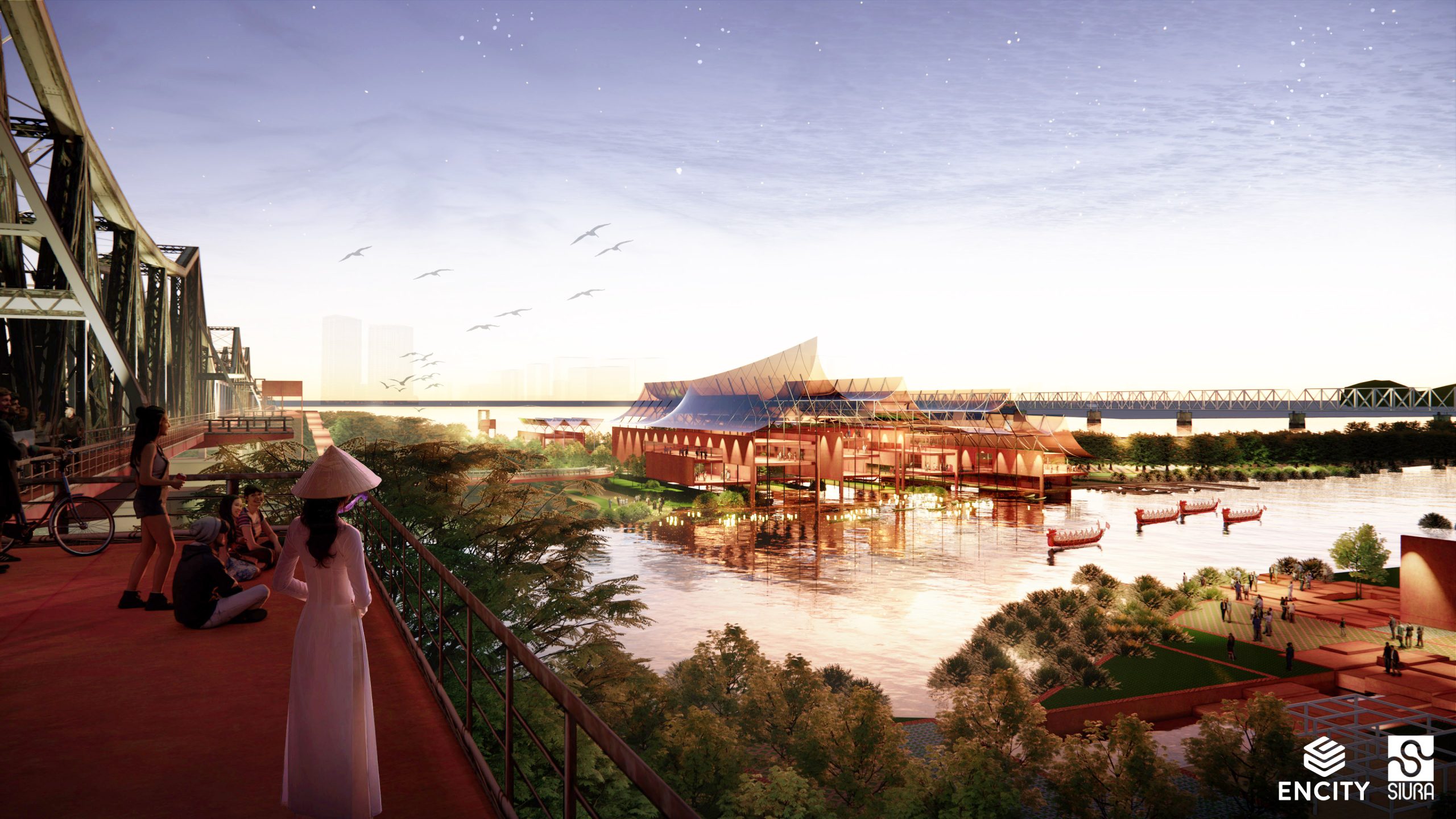
What sets the project apart is its systems-based methodology. Detailed hydrological modelling across recurrence intervals informed a three-zone strategy linking biodiversity with land use. Social research documented everyday practices, such as riverside bathing, informal farming, and community rituals, and wove them into a spatial framework that preserves memory while enabling transformation. In this way, the plan formalizes the informal, ensuring inclusivity rather than displacement.
“The plan is applauded for its profound dual purpose: to create a vital flood plain for urban resilience and a destination park that reconnects the city to its riverfront. The proposal is a direct and commendable response to Hanoi’s critical lack of public green space. Its success is rooted in a meticulous strategy to ensure accessibility and attraction through footbridges and a diverse program, including a bird sanctuary, gardens, a food market, and sports facilities. The jury was impressed by the masterplan’s unwavering commitment to restoring biodiversity through diverse habitats. The phased implementation plan–prioritizing ecological restoration first, then recreational infrastructure–demonstrates a sophisticated and sustainable approach.” – Judges’ Citation
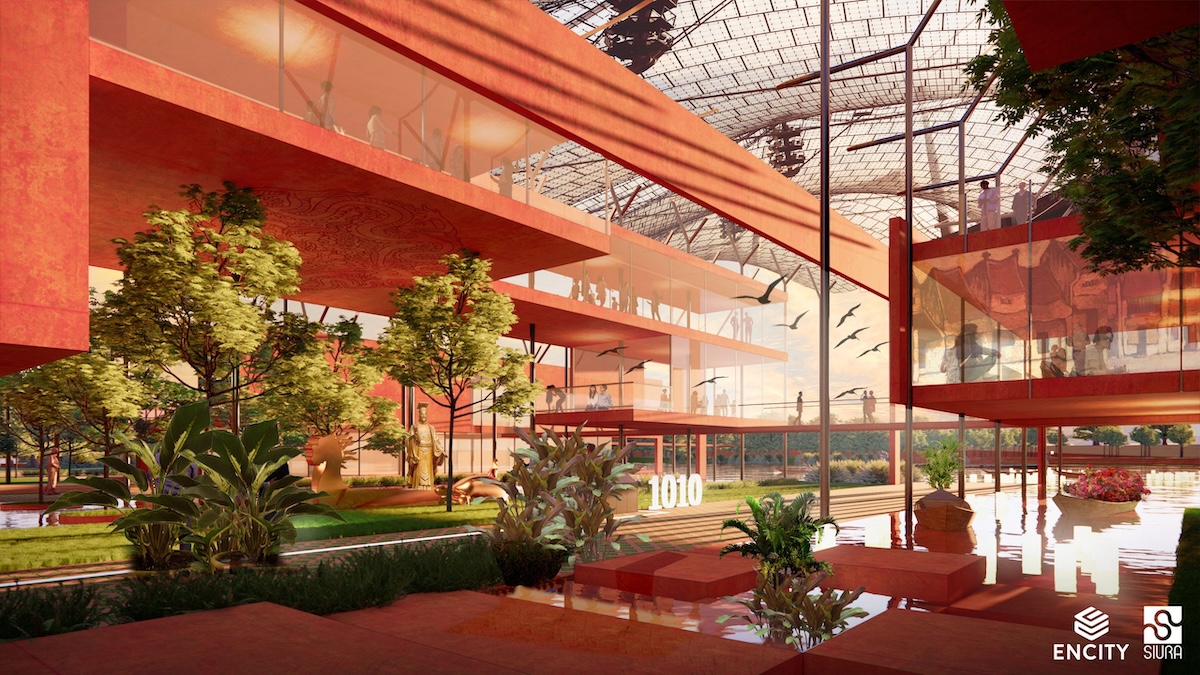
By redefining the floodplain not as wasted land but as a regenerative civic asset, the Red River Dragon Park demonstrates how thoughtful design can align resilience, equity, and memory. It offers a replicable model for Southeast Asia’s flood-prone cities, and fortransforming a backwater into a of turning backwater into waterfront.
About the project: Dragon Park by the Red River

 VI
VI