

Trees play a vital role in human life, especially in large, densely populated cities. A prominent benefit of trees is their ability to produce oxygen and water vapor while absorbing radiation, thereby creating clean and cool air for urban areas. Additionally, trees help improve environmental pollution by filtering out dust. However, super typhoon Yagi, after making landfall in Vietnam, left behind immense damage to the ‘green lungs’ of the cities it passed through. According to statistics from Hanoi’s Department of Construction, as of 6 AM on September 13th, over 40,000 trees had fallen in Hanoi, while Hai Phong’s People’s Committee reported that typhoon Yagi caused 82,000 trees to fall in the city.
Numerous reasons have been cited for the tree falls after the typhoon, including objective factors such as the extremely destructive power of typhoon Yagi with wind speeds reaching level 16 or higher (over 184 km/h), as well as subjective factors related to the techniques of selecting, planting, and caring for trees. The current situation highlights the urgent need to find specific solutions to address climate change.
 Fig. 1: Fallen row of trees in Hanoi post-storm (Credit: Vietnamnet)
After analysing the aforementioned causes, urban design and landscape design experts at enCity believe that several solutions can be applied to enhance the resilience of urban green spaces against strong winds and storms.
1. Creating root space doubled as urban flood mitigation
It is undeniable that tree pits in urban areas are not designed to be tree-friendly. Trees face significant difficulties in absorbing rainwater, nutrients, and growing due to factors such as small pit areas (a), elevated pit construction above the ground level or surrounded by high concrete walls (b), or completely covered by concrete (c). It is time to consider more sustainable urban design solutions by designing tree pits combined with rainwater harvesting to provide irrigation for trees and reduce urban flooding.
 (a) (b) (c)
Fig. 2: Tree-unfriendly pits (Credit: (a) Thanh Niên News, (b) Tuổi Trẻ News, (c) Công An News)
For areas with wide sidewalks, such as newly planned urban areas, tree pits should be connected to form an ecological drainage channel with a storage capacity of approximately 20-30 cm. When the water level rises, rainwater will flow into the collection pipe and the drainage system. The trapped rainwater not only provides irrigation for trees, enhances the infiltration and evaporation cycle but also reduces the load on the urban drainage system.
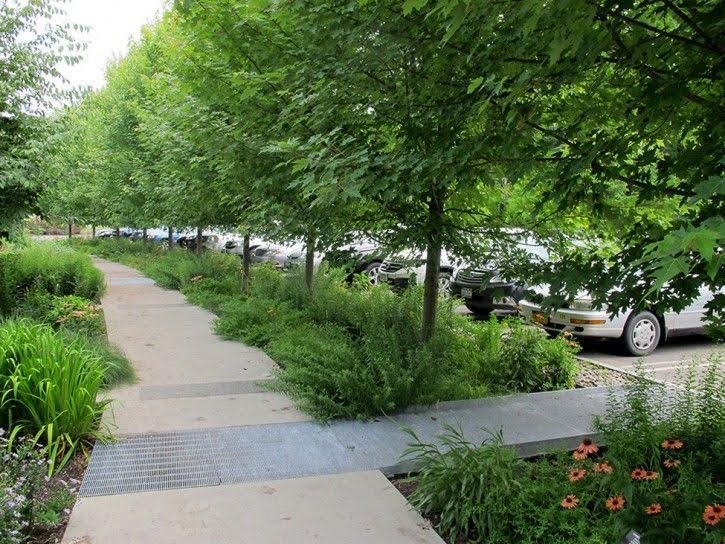 Fig. 3: The tree-planting pond is designed as an ecological trench system with the ability to flood and provide nutrients for plants at the Brian C. Nevin Welcome Center, Ithaca, New York (Credit: Mujahid D. Powell)
For areas with small sidewalks, commonly found in old quarters or old cities, sidewalks are often used for various purposes, and tree pits are very small. In this case, the solution of installing underground water-absorbing pits can be considered. Rainwater collected on the road through drains and permeable materials will be directed into these water-absorbing pits, thereby providing nutrients for trees and reducing the amount of water for the urban drainage system.
 Fig. 4: Solution of digging water-absorbing pits to increase rainwater absorption capacity for plant root systems (Credit: Citygreen)
2. Prioritising trees with wind resistance
Traditionally, the selection of urban trees has been based on many criteria, such as shade coverage, tree lifespan, flower fragrance, landscaping capabilities, and adaptability to local natural conditions; yet, the requirements of extreme wind resistance of trees have rarely been considered. In reality, most roads and parks in Hanoi witnessed massive tree falls after storms with strong winds like Yagi. There are also a few roads with very few fallen trees, such as Giai Phong Street in Hanoi with rows of Pterocarpus macrocarpus under similar planting conditions. To improve the wind resistance of our urban green system, we need to conduct more thorough research on tree species known for their ability to withstand strong winds. This information can then be used to guide the development of new green spaces in our cities.
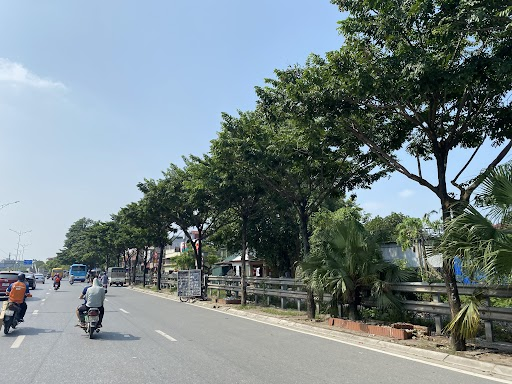
Fig. 5: Row of Pterocarpus macrocarpus unharmed post-storm (Credit: Giang Đinh)

 VI
VI