

Dr Liu Thai Ker (刘太格) has passed away at the age of 87.
Lui Thai Ker laid the groundwork for Singapore’s urban development and planning approach. He established the Housing Development Board (HDB), a government body that provides highly affordable homes—averaging just four times the household income—to nearly 80% of the population (once reaching as high as 87%). Later, he also established the national planning agency, Urban Redevelopment Authority.
For decades, he shaped Singapore’s public housing and national planning—first at the Housing & Development Board (HDB), and later at the Urban Redevelopment Authority (URA)—establishing the discipline and systems that allowed the city to function. He demonstrated, through practice rather than rhetoric, that planning is not a slogan, but an operating system.
I would like to bid him farewell with one thought: planners may be among the loneliest people in the world.
To plan a city, one must understand the past like a historian; be economically hard-nosed like a policymaker; master technical constraints like an engineer; and still retain a dreaming heart—a belief in the possibility of a decent future for millions. The paradox is this: you must understand those millions deeply in order to create a city they can belong to, love, and find meaning and opportunity in—yet they may live their entire lives without ever knowing your name.
Dr Liu once compared planning to an iceberg: what is visible above the water is only a thin slice of its true mass. The metaphor is brutally accurate. Our world tends to reward only the visible—beautiful renderings, glossy images, iconic buildings (even though planning is never about a single building). Meanwhile, the submerged work—systems, social models, operating logic, sequencing, unavoidable trade-offs, and long chains of cause and effect—is what truly determines a city’s future, and yet receives little attention.
In a populist age, dominated by ego-driven leadership and short-term grabs for credit, planning is reduced to a picture to be displayed rather than a system to be held accountable. People cheer for “highlights,” “icons,” “game-changers,” and short-term metrics—then act surprised decades later when cities become congested, fragmented, unaffordable, and slowly lose their liveability. Few have the patience to engage with the iceberg below the surface, where the hardest decisions reside, and where getting it wrong by an inch can cost decades and affect millions of lives.
I was fortunate to meet Dr Liu recently at a workshop and to attend what would become his final lecture—just one month before his passing. Nearly 90, with his unmistakably strong eyebrows, he remained razor-sharp. Looking at a plan under discussion, he said to me quietly, “I see projects. I don’t see the system.” One sentence, yet it laid bare the disease of our time: we are drifting from systems thinking toward project thinking; from long-term responsibility toward instant gratification; from depth toward imagery.
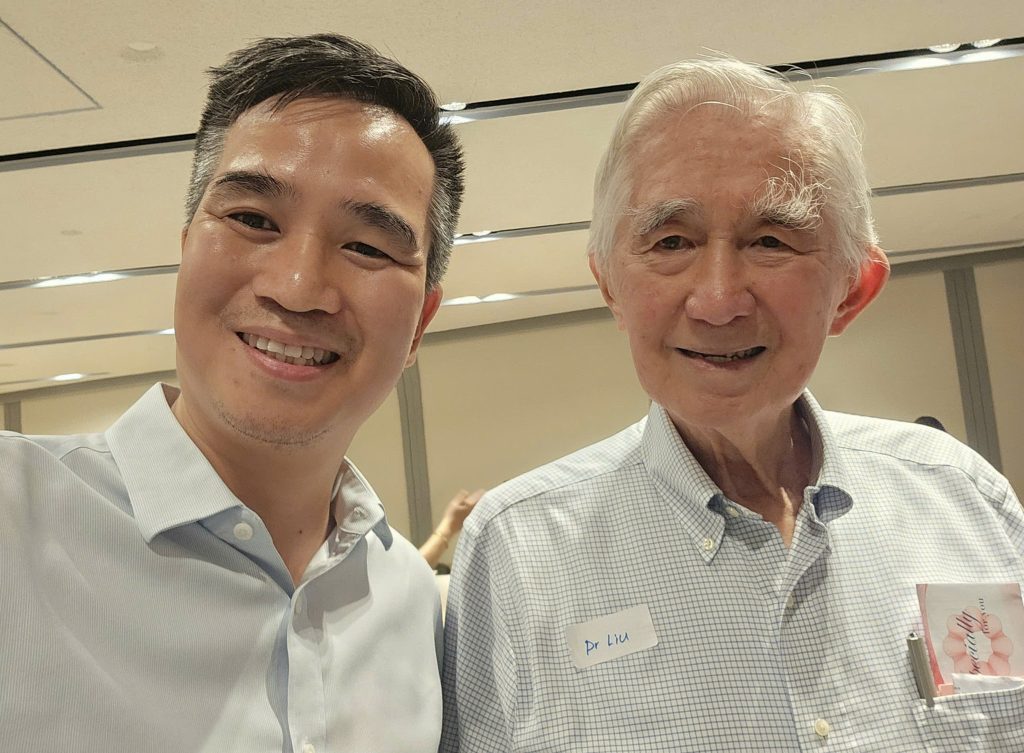

And yet perhaps Dr Liu was not entirely alone. He found a rare counterpart in Mr Lee Kuan Yew—cold, unsentimental pragmatism paired with a fierce devotion to the nation—someone capable of resisting speculation and vanity, and of giving planners the space to address real problems. That alignment gave Singapore a rare opportunity: to practice planning as long-term system-building, rather than as short-term populism or the pursuit of superficial desires.
May he rest in peace.
And may those who still understand, and still ache for planning, remain brave enough to do the submerged work of the iceberg—often unseen, often misunderstood, and rarely applauded, yet decisive for millions.
Do Dzung Nguyen, CEO, enCity Urban Solutions
Cover photo: Darren Gabriel Leow, assisted by Chong Ng

 VI
VI