

Atlanta, USA — February 5, 2026
In the historic setting of The Trolley Barn, a more-than-120-year-old landmark that once served as the headquarters for Atlanta’s first streetcar company, the Design Excellence Awards ceremony of the College of Design at the Georgia Institute of Technology (Georgia Tech) celebrated individuals whose work has made a “lasting mark and long-term impact” on design and the built environment.
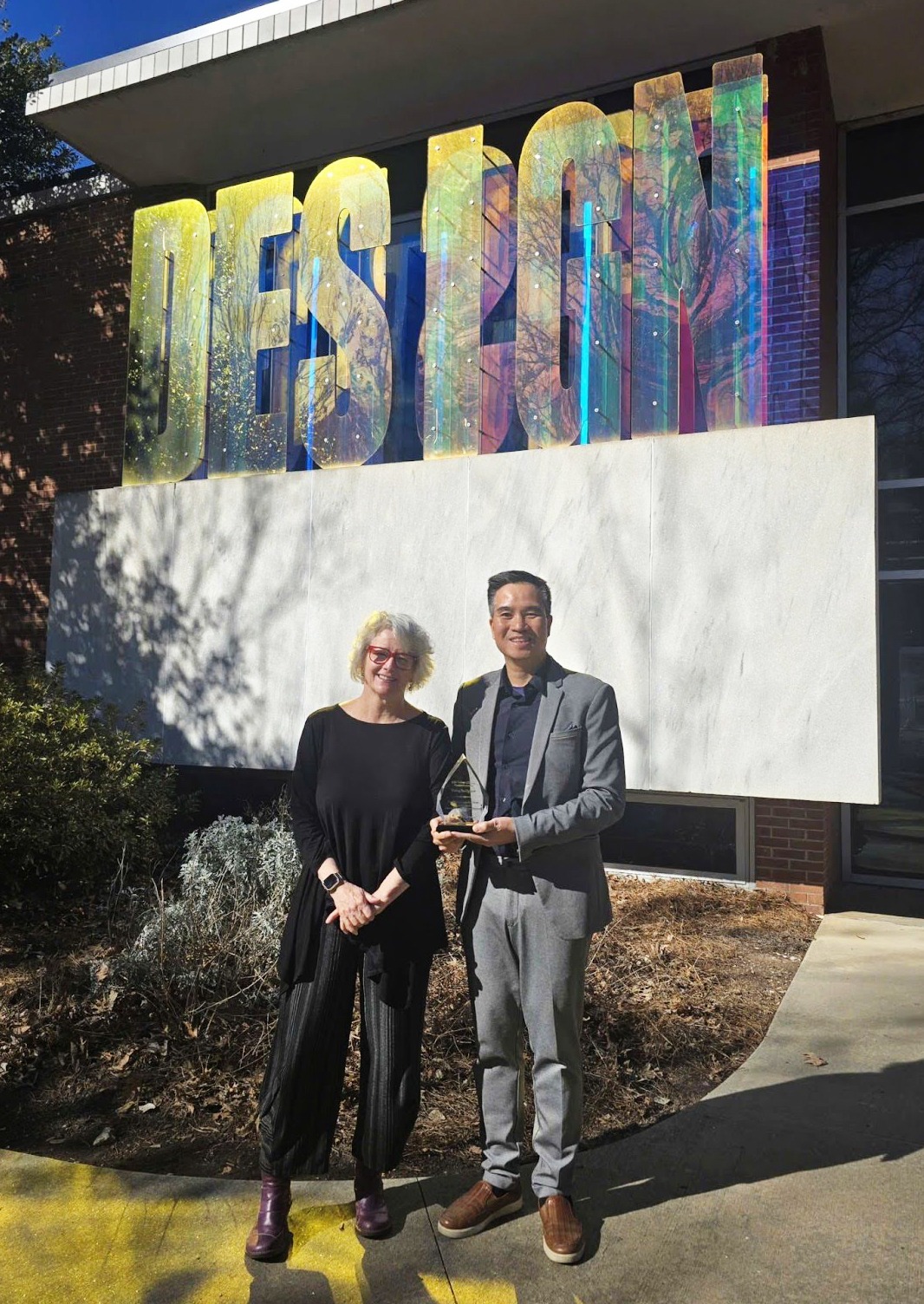
At this year’s ceremony, Mr. Nguyen Do Dzung, CEO of enCity, was announced as a recipient of the Distinguished Legendary Design Excellence Award—the College of Design’s lifetime honor recognizing careers that “set standards through dedication, professional excellence, and enduring legacy.” The award was presented by Professor Ellen M. Bassett, Dean of the College of Design.
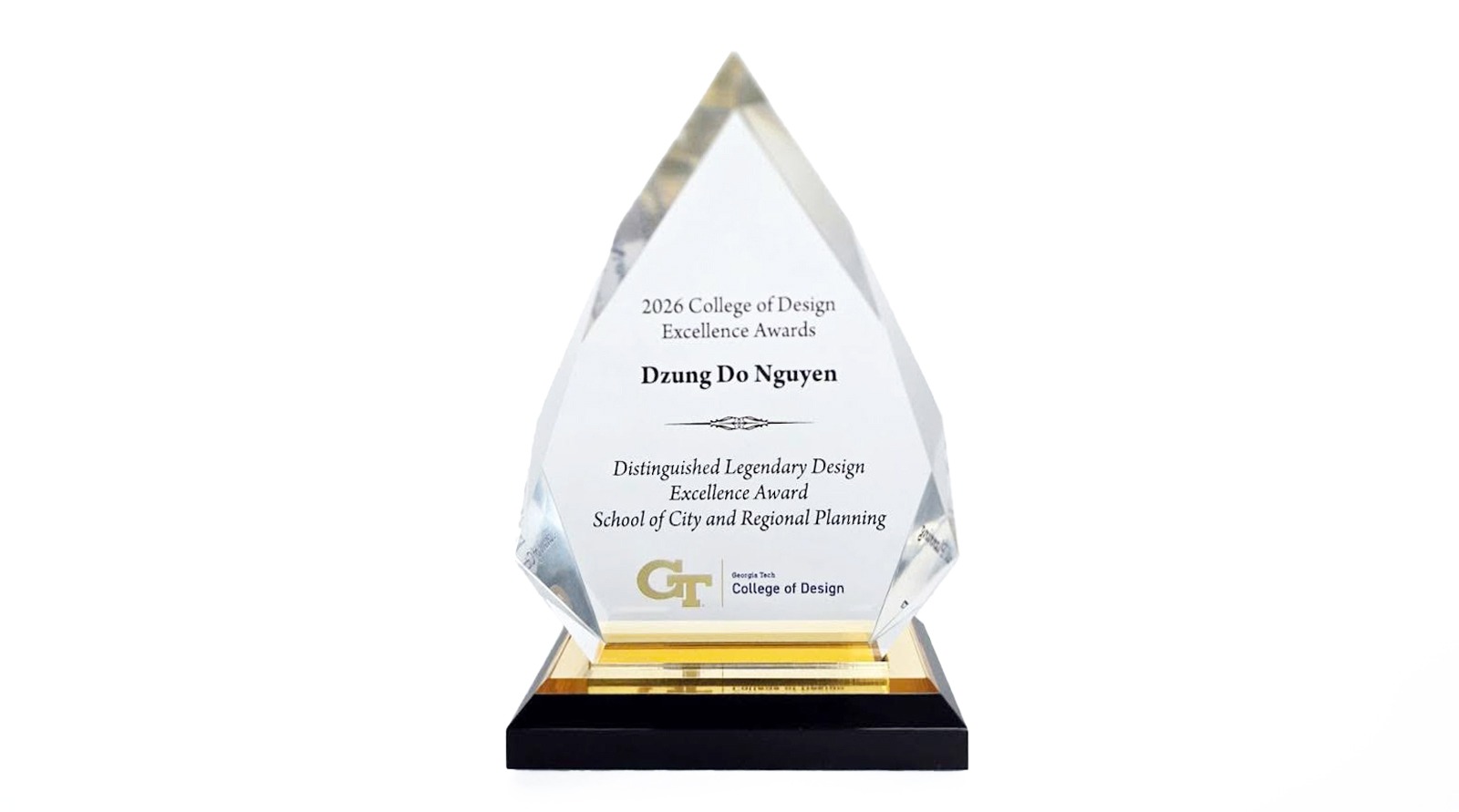
What underscores the stature of this recognition is the caliber of honorees celebrated at the same event. This year, Mr. Dzung was recognized alongside David Green (Arup)—a leading voice in urban design at the global engineering and design firm—and among a class of honorees that also included Michael Arad, architect of the National September 11 Memorial in New York; Mansoor Rahimat Khan, Founder & CEO of Beatoven.ai and a Forbes 30 Under 30 Asia honoree; and Professor Nickolas Lea Faust, a NASA scientist whose pioneering contributions to remote sensing earned him a place in the Space Technology Hall of Fame in 1993.
In his acceptance remarks, Mr. Dzung reflected on what he carried forward from his time at Georgia Tech: “Design excellence isn’t about being perfect—it’s about curiosity, courage, and learning in the real world.”
That spirit has shaped his career: Mr. Dzung earned his Master’s in City and Regional Planning from Georgia Tech in 2012 as a Fulbright Scholar, went on to lead major planning projects in more than 10 countries, and later taught at the graduate level in planning at the National University of Singapore (NUS). Over the years, his work has received numerous international accolades, including the Mayor’s Urban Design Award (Calgary, Canada), a National Planning Award from the American Institute of Certified Planners (AICP), and roughly ten professional awards from the Singapore Institute of Planners (SIP). Notably, this is also the second personal distinction he has received, following his recognition by Ho Chi Minh City as one of 50 exemplary overseas Vietnamese who have contributed to the city’s development over the past 50 years.
Acceptance Speech by Mr. Nguyen Do Dzung:
Good evening,
I’m truly moved and honored to receive the Distinguished Legendary Design Excellence Award—the longest award title I’ve ever received! (Laughter)
This is a tremendous honor—especially to be recognized alongside people whose careers and impact I deeply admire, like David Green and Michael Arad.
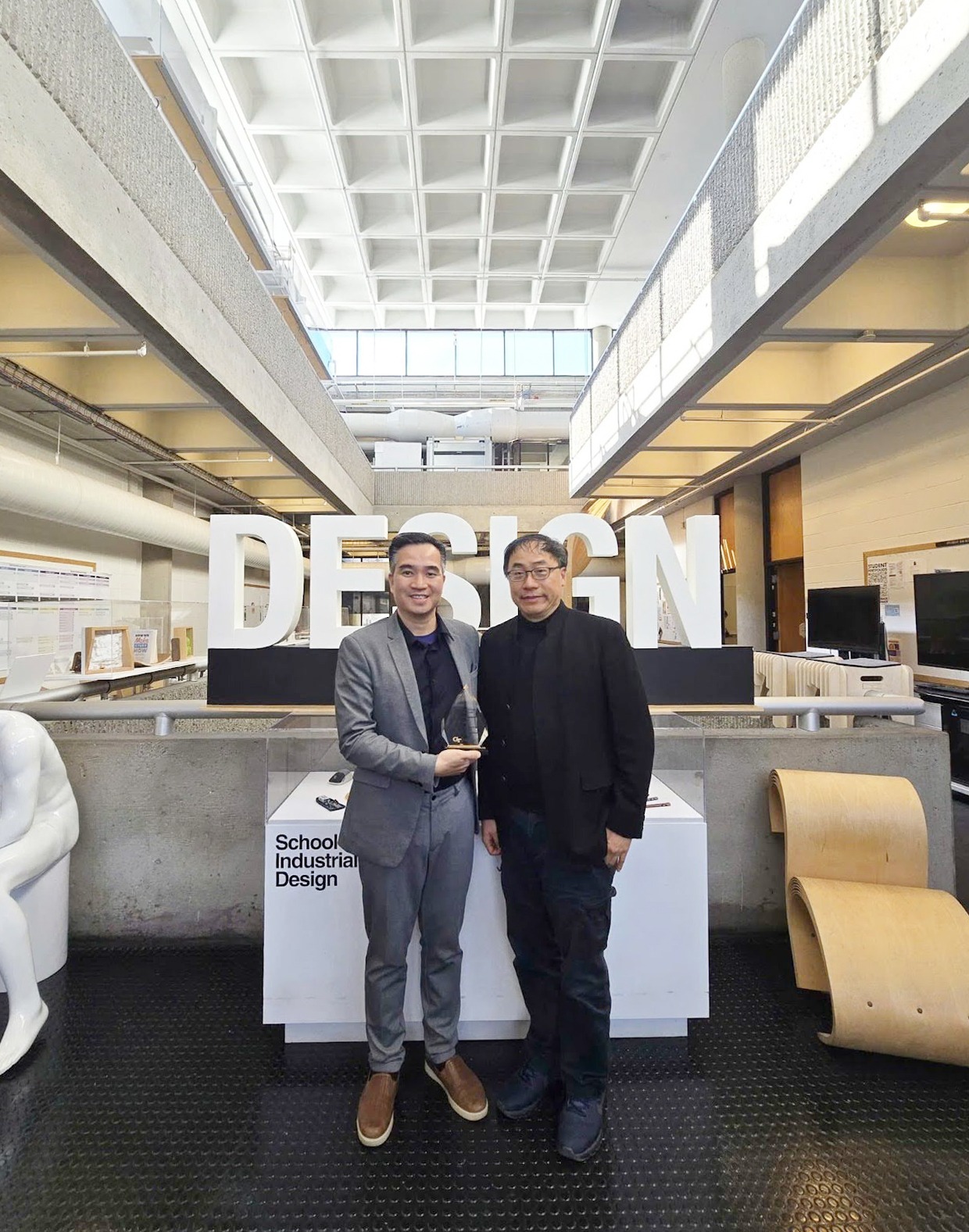
First, I want to express my heartfelt thanks to Professor Perry Yang—not only for everything he taught me, but also for nominating me for this award. That’s exactly why we should keep good relationships with our former professors! (Laughter)
In Professor Yang’s urban farming studio near the Martin Luther King Jr. Memorial, there were many times when we… honestly didn’t know what we were doing—and that was part of the education. We learned to live with ambiguity, to experiment, to fail, and to innovate. My classmate who’s here tonight, Elizabeth Ward, can probably confirm those “lost moments”—hello, Elizabeth!
What I learned from Professor Perry went far beyond a class or a single project. His way of teaching—exploring alongside students rather than standing above them handing out answers—stayed with me as an educational philosophy I’ve continued to pursue.
I also want to thank Professor Mike Dobbins*. His assignment to measure places we love and places we dislike taught me that design begins with attention—with careful observation, not rigid rulebooks—so we can understand why a place makes people feel a sense of belonging, or distance.
And I want to thank Professor Bruce Stiftel**. When I once asked whether I should take on a controversial project, he answered by asking me a question I still carry today: “Do you want to make a change—or just protect your name?”
That question has guided me through many difficult decisions throughout my professional life.
When I was still a graduate student here, I had the chance to attend Michael Arad’s talk on designing the 9/11 Memorial. That conversation shaped how I think about design. The way he placed the thousands of names along the memorial’s edge—not as a list, but as human relationships—helped me understand that the most powerful design choices are sometimes the quietest ones. Design isn’t only about form or function; it is dignity, memory, and a connection that reaches deep into the human heart.
Both of my companies—enCity and enfarm—have grown from these lessons. Georgia Tech taught me that design excellence isn’t about being perfect—it’s about the curiosity to go further, the courage to commit, and the ability to learn from the real world—from real people and real challenges.
Thank you sincerely for this extraordinary honor.
Note:
* Professor Mike Dobbins founded what is recognized as the world’s first urban design office in New York City in the 1970s and served as Planning Director for the City of Atlanta during the 1996 Olympics.
** Professor Bruce Stiftel served as head of the School of City and Regional Planning at Georgia Tech’s College of Design during Mr. Dzung’s time as a student.


 VI
VI