

Context
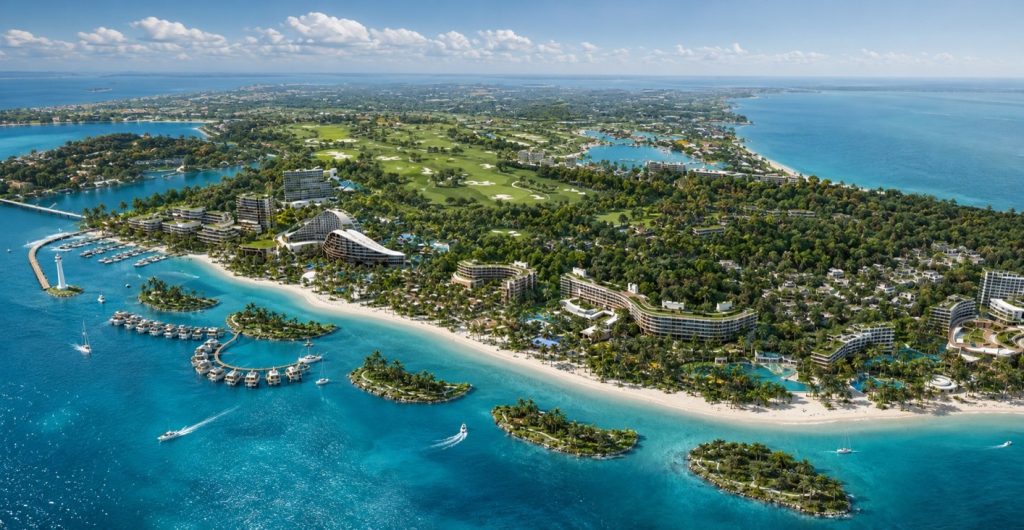
The project occupies a distinctive coastal landscape shaped by three interconnected natural environments: the beachfront, inland waterways and forested hills. The site’s varied topography, rising from approximately +1 metre along the coast to around +35 metres within the higher terrain, creates opportunities for panoramic viewpoints, forest retreats, waterfront destinations and a sequence of experiences moving from sea to hill.
The draft master plan already establishes a diverse tourism programme, including beachfront hotels and resorts, an international exhibition centre, family attractions, a marina, golf-related hospitality, luxury villas, tree-house accommodation, a treetop walk, water villas and residential components. These uses are distributed across several land parcels and natural landscape settings.
The key opportunity is to transform these individual components into one coherent destination, rather than a collection of isolated developments. Inspired by the integrated destination model of Sentosa, the master plan can combine accommodation, recreation, entertainment, nature, culture and mobility within a clearly structured visitor experience.
However, unlike a conventional attraction-led resort, the project should be positioned as a nature-first coastal destination. The existing forests, terrain, waterways and shoreline should become the primary identity of the development, with architecture and attractions carefully inserted into the landscape.

Vision
A Coastal Nature Playground
To create a landmark eco-tourism destination where forest, water, recreation and hospitality come together as one immersive coastal experience.
The development will offer the variety and energy of an international integrated resort while maintaining a distinctive landscape-led character. Visitors will be able to move seamlessly between beaches, forest trails, waterfront promenades, family attractions, wellness retreats, golf experiences, cultural destinations and marine activities.
The destination should feel like an island escape on the mainland: accessible and vibrant, yet surrounded by nature. Development will be concentrated within carefully selected areas, allowing substantial parts of the forest, waterways and coastal landscape to remain protected and visually dominant.
The project will become:
A destination to discover nature
through forest walks, treetop experiences, waterways and coastal ecology.
A destination to stay and recharge
through resorts, eco-lodges, villas, wellness facilities and beachfront hospitality.
A destination to play and explore
through family attractions, outdoor recreation, marine activities and adventure experiences.
A destination to meet and celebrate
through the exhibition centre, cultural venues, events, dining and waterfront public spaces.
A destination that belongs to its place
through climate-responsive architecture, local landscape character, regional culture and environmentally responsible development.

Strategy
1. Nature-Led Master Planning
Use the existing forest, coastline, waterways and natural topography as the main structure of the master plan. Development should be concentrated on suitable land, while sensitive landscapes, ecological corridors and waterfront zones are protected and enhanced as part of the visitor experience.
2. Create Distinct Experience Districts
Organise the destination into clearly defined but connected zones: an Arrival and Exhibition Gateway, Family Entertainment District, Forest Adventure Zone, Golf and Wellness District, Beachfront Resort District, and Marina and Marine Leisure District. Each area should have its own identity while contributing to one integrated destination.
3. Connect the Destination Seamlessly
Establish a continuous destination loop linking hotels, attractions, beaches, forest experiences, golf facilities and the marina. Electric shuttles, shaded pedestrian routes, cycling paths, treetop walks, beachfront promenades and water taxis should reduce dependence on private vehicles.
4. Develop Signature Eco-Tourism Experiences
Create memorable attractions rooted in the site’s natural character, including a treetop walk, tree-house villas, forest trails, marine discovery islands, water-based activities and a sea-to-forest journey. These experiences should become the project’s key identity and differentiate it from a conventional resort destination.
5. Integrate Architecture with Landscape
Adopt a contemporary tropical architectural language that responds to the terrain and coastal climate. Buildings should use stepped massing, shaded terraces, planted roofs, natural ventilation and strong indoor–outdoor relationships, allowing the forest and coastline to remain visually dominant.
6. Combine Tourism, Leisure and Wellness
Balance high-energy attractions with quieter experiences such as wellness retreats, nature walks, golf, spa facilities and low-density villas. This creates a destination that appeals to families, couples, groups, business travellers and long-stay visitors throughout the year.
7. Deliver Sustainable and Phased Growth
Integrate water recycling, natural drainage, renewable energy, habitat restoration and low-carbon transport across the development. Begin with the arrival gateway, beachfront hospitality and family attractions, followed by the marina, forest experiences, golf, wellness and residential components.

 VI
VI