

In modern urban planning, much is said about “hard infrastructure” and “soft infrastructure” as essential prerequisites for development. In the Biên Hòa Đông Phố project, which aims to transform Vietnam’s first industrial zone, Bien Hoa 1, into a modern urban center, these prerequisites are only realized when hard infrastructure becomes “invisible,” allowing soft infrastructure to take center stage. Here, hiding infrastructure is not merely a technical solution but the core strategy for developing a dual urban model that combines TOD (Transit-Oriented Development) and GOD (Ecology-Oriented Development). This is more than a design choice—it is a philosophical approach to development, reflecting Vietnam’s urban evolution from physical expansion to enhancing the quality of life.
 Figure 1: The CBD with a metro station on the hilltop and a large ecological space at the foot of the hill
 Figure 2: Network of 3 metro lines passing through the project area
Infrastructure: Invisible, yet accessible
With three metro lines, Biên Hòa 1 has the potential to be a key transport node in the Southern economic region. Instead of common elevated lines—easy to build but often creating bulky urban scars—our plan takes a different route: putting the metro underground or semi-underground. This leverages the hilly terrain, cutting construction costs and avoiding visual clashes with National Highway 1A, the city’s iconic frontage. This “invisible infrastructure” preserves urban continuity, allowing plazas, public spaces, greenery, and landmarks to develop seamlessly, unburdened by heavy traffic. When infrastructure stops being a display of technical power and becomes a “silent foundation” for a vibrant ecosystem, the metro doesn’t need to be seen or heard. It simply needs to be accessible, present, and punctual. Then, infrastructure no longer divides urban space, but becomes an unseen backbone for an efficient, peaceful, and connected life.
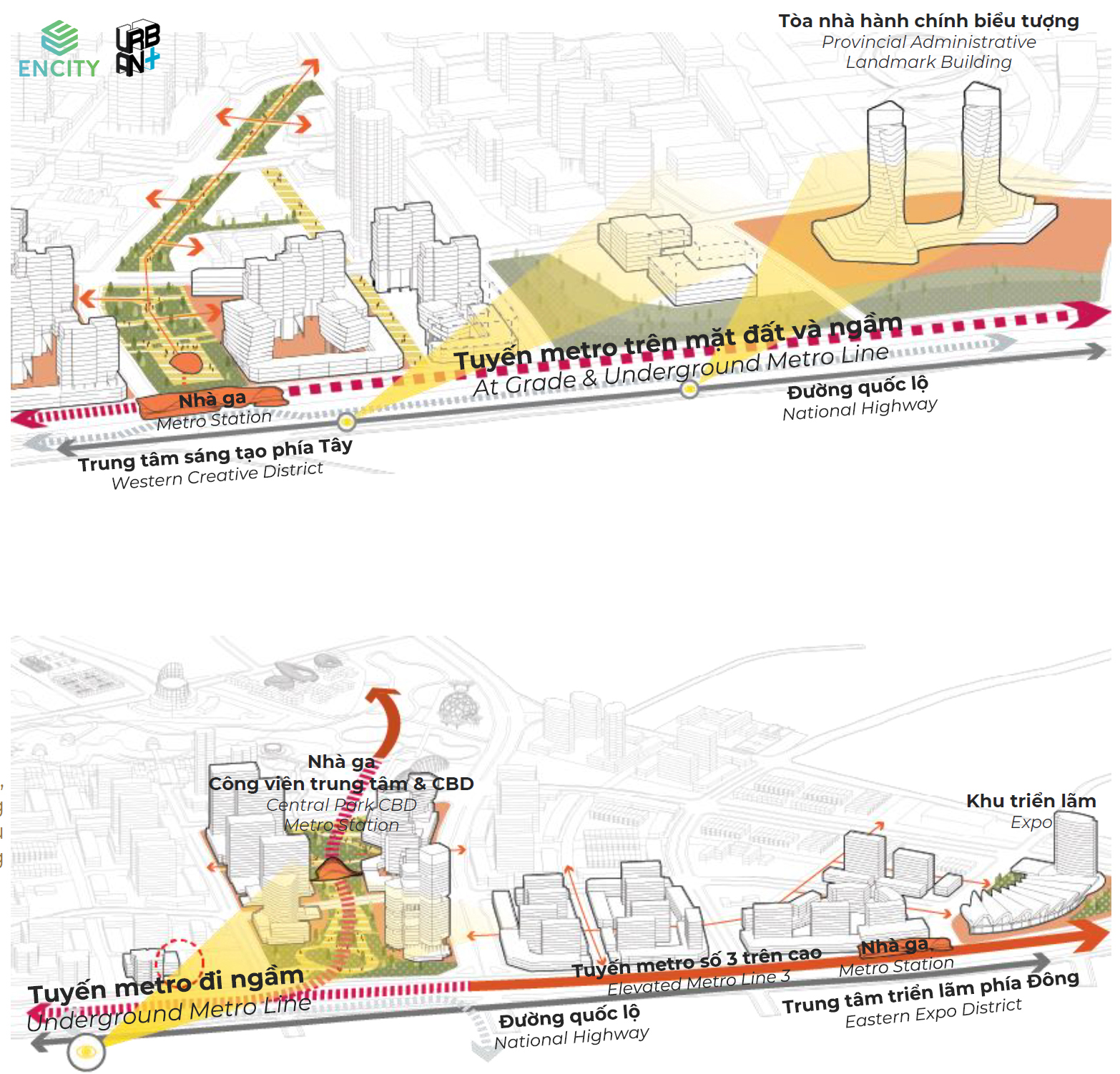 Figure 3: Open view from National Highway 1A into the project area, unobstructed by the urban railway corridor
TOD as a Green Destination
The TOD and GOD integration at Biên Hòa 1 creates a three-layered spatial structure: infrastructure, urban, and nature. The transport core is underground, topped by a commercial-administrative center on a high hill. South of the CBD, where the land dips, an ecological park features regulating lakes, green corridors, water-filtering landscapes, museums, botanical gardens, and public attractions. This is smart allocation: dynamic development on the upper layer, absorption and regulation below—all linked by an almost invisible infrastructure system.
Instead of public transit dominating, TOD at Biên Hòa 1 becomes a destination—a natural, integrated urban experience. Conversely, ecological spaces aren’t just decorative; they’re structural, absorbing density and shaping local identity. While TOD boosts density and reduces car reliance, GOD ensures this density doesn’t diminish life quality. For these two systems to coexist rather than compete, infrastructure must recede when necessary.
Unlike many cities grappling with development-environment, traffic-identity, or speed-quality conflicts, the “invisible infrastructure” strategy in Biên Hòa Đông Phố offers a viable path. Planning isn’t just about balancing contradictions; it’s about unlocking new potential. When TOD is designed with GOD, and hard infrastructure recedes for soft spaces to shine, cities become not just more efficient, but more livable, centering on people, not vehicles or buildings.
 Hình 4: Figure 4: Illustrative plan of the CBD area
Beyond land-use change
In many Asian cities, we often see metros stacked over highways, expressways crossing interchanges, and elevated stations looming like steel blocks in residential areas. This is the consequence of infrastructure development “following” urban growth, where planning is forced to “squeeze into what’s left.” In contrast, the Bien Hoa 1 project’s hallmark is its upfront, synchronized planning, with modern infrastructure cleverly tucked into the terrain’s natural dips.
Biên Hòa 1 proves that redevelopment isn’t merely relocating factories for housing. It’s an opportunity to rethink infrastructure’s role in modern cities. When TOD and GOD are planned simultaneously, and infrastructure operates quietly beneath, cities can achieve true sustainability—economically, environmentally, and culturally. In 21st-century urban planning, hiding infrastructure is the clearest demonstration of advanced development and integrated planning capabilities.
Biên Hòa Đông Phố is a joint collaboration between enCity and Urban+. Stay tuned as we dive deeper into Transit-Oriented Development (TOD) and share more insights from our various projects.

 VI
VI