

enCity is pleased to introduce Clemens Bauer as the latest addition to our team as Principal + Senior Manager in Master Planning and Design. Since he joined in April’22, we have begun to see marks of his method in our projects. Clemens believes in a holistic approach to urban planning that enables cities and communities to thrive, and adopts a multidisciplinary approach and process in his many projects that are spread across China, Indonesia and Maldives.“It is very rewarding to see Ideas and Concepts – for cities and communities that we plan, being accepted, implemented and even evolving beyond your initial planning intent. Planning is not a one-way street, it is about creating a framework that enables a multitude of initiatives to happen”, Clemens contemplates.
Though he began his design journey in Germany, Clemens has spent the vast majority of his career designing Asian cities, and has lived in Shanghai, Singapore and Jakarta. His passion for Asian food and culture is clear in his day-to-day and he’s already a vibrant addition to the bustle in all our offices. We’ve also been indulging in viewing his beautiful sketches.

One of Clemens Bauer’s many spirited sketches, illustrating a signature waterfront development at Dong Hoi.
As a planner whose care for people and communities shines through his work, Clemens advocates that good design should allow cities to be prepared for disruption. A good planning framework might allow cities to better adapt to situations like the global pandemic gave rise to. He considers urban design, infrastructure resilience, sustainable development and economics in all his projects; “only by doing so can you ensure the long-term viability of these projects development and communities”.
Sustainable township planning: To create future green, recreational and lifestyle townships
With background in civil engineering, architecture, urban planning, as well as real estate finance, Clemens Bauer’s years of experience in Strategic Planning, Urban Design, Master Plan and Architecture Design are showcased throughout his projects around Asia.
Jakarta Garden City is a township developed from a flood-prone area in the east of Jakarta, so the design raised the whole area above the flood level to create a new integrated township which consists of 290 hectares of sustainable township development and was awarded Singapore’s Building and Construction Authority’s Green Mark (Gold).. Clemens was heavily involved in the master plan for second phase of development- 32 hectares includes Retail Mall with high-rise apartments, a SOHO with podium, commercial and serviced apartment towers, around 500 shophouse units, 4 tower apartment cluster, around 500 units of Landed Houses, and a fresh produce market.

Jakarta Garden City
Another of Clemens’s landmark projects in Indonesia, is the Semarang Waterfront City ‘Pearl of Java’; the 300 hectare integrated waterfront township development on the northern shores of Semarang. It is earmarked as the most livable and desirable residential address in the capital city of Central Java. The development will accommodate a Marina, Shopping Mall, International schools, Hotel and resorts, Residential clusters as well as commercial and leisure facilities. The masterplan also focuses on resilience of the reclaimed land, in light of potential flooding from the nearby mountain areas.
Despite challenges that planners face, dealing with urban, political, community and society issues in ‘instant city making’ within a very short time, his passion for people shines as he describes his design goals. Practising with a clear conscious and a blend of west-east experience nurtured in Singapore, he believes in “Creating a powerful Vision and an effective , achievable framework by applying good planning principles coupled with grass-rooted ideas and cultural nuances, working together in a team to create an outstanding new destination for people to live, work and play”.
He also strives for his work to improve and support local planning standards. He has in his experience observed a shift from governments simply more adapting external benchmarks in Asian cities, to now digging deeper into local history, social structures, and local culture and traditions, to create something that is not just global but has global standards, and is yet very localized.

Semarang Waterfront City, ‘Pearl of Java’
A revamp of Male as the living room of Male in Maldives
The Male Northport project whom Professor Heng, Senior advisor of enCity also worked on consists of 14.5 hectares of redeveloped port area located north of Male, and envisioned to become a new tourism gateway and vibrant urban living room for recreation and entertainment for the people of the Maldives. The development will include a new International Cruise & Ferry Terminal, Soho Offices, commercial, leisure, recreational and community facilities as well as adapted heritage facilities.
The past history of the site was merged and molded into exciting future prospects, while still telling the story of its past and previous functions as a port city. The container park for example has become a public realm for Male, for tourists as well as locals. This creates a melting pot for different cultures and uses and will be a welcomed addition to the city and help it transition to a new chapter of diversification.
Clemens sees reward in use of spaces that he envisions for the city being used beyond his imagination: “At the end of the day (when) what you had in mind for a community is accepted and used in ways you couldn’t even imagine, it goes beyond your planning. It’s very rewarding to see that happen.”
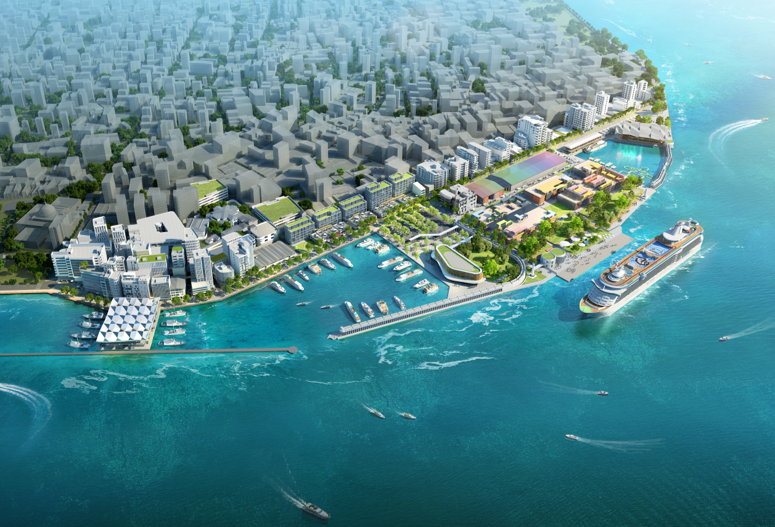
Male Northport Redevelopment Masterplan and Urban Design
Integrated and inclusive Science City Design
Guangming Science City (Shenzhen, China), which Clemens had completed under his previous company, was envisioned as a pilot city to serve science and innovation through a 700 hectares of knowledge innovation-based Science City plan to set a new benchmark in integrated eco transit oriented development district development for Shenzhen. It is to create a new ‘Silicon Valley’ with a conducive environment, through mainly residential zones. Innovation and industrial parks, along with fintech communities have been integrated with existing urban and natural features to attract high profile local and foreign talent. The urban fabric has the bioware, the hardware and the software to create the competitive work environment that needs to be achieved. The design centered around “how all these layers of natural features, technology features and urban features come together and create the best and competitive environment to attract such talents and to support this kind of work environment that it (the urban fabric) wants to achieve.”


Guangming Science City, Shenzhen
Another project Clemens had been involved in during his time in Shanghai, was an industrial city in Changchun, China- The Change I-City which comprises 336 square kilometers of a strategic district extension development in the north-east of ChangChun through contextual integrated planning. The plan includes advanced generation 4 industrial parks, liveable lakeside residential communities and surrounding innovation parks that integrate with the existing urban fabric to foster the city’s drive to become a major national Industry and Society 4.0 provider.
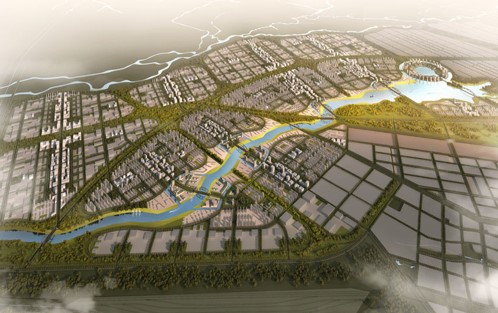 Changde I-City, Changchun
An integrated approach, a good team, collaborators and partners, along with clients that really believe in the projects are factors that lead to a successful project, which can tackle issues of public realm, social issues like social equity and how to conserve natural resources. All in all, Clemens appreciates and advocates for healthy design processes that bring deeper association, identity and belonging to the people we serve.
Watch this video to learn more about Clemens Bauer and his projects.

 VI
VI